

The rules changed faster than most travelers noticed. Here is everything you need to know before your next flight.
Why Power Bank Rules Changed in 2024 and 2025
The Air Busan fire in January 2025 changed everything. A lithium battery ignited mid-flight, forcing an emergency evacuation. Nobody died, but the incident accelerated regulatory changes that had been coming for years. Within months, aviation authorities across Asia, Europe and Australia had tightened their carry-on policies for lithium batteries and power banks.
The underlying concern is simple: lithium batteries can cause thermal runaway — a chain reaction that produces intense heat and is nearly impossible to extinguish at altitude. Checked baggage fires are catastrophic. Carry-on fires can be managed. This is why power banks are permitted in the cabin but not in the hold, and why the rules around capacity and certification are getting stricter, not looser.
The Global Standard: ICAO 2026
The International Civil Aviation Organisation (ICAO) updated its dangerous goods regulations in March 2026. These guidelines are binding across all 193 ICAO member states and set the baseline that every airline and national authority must follow.
Under ICAO 2026 rules, the key limits for power banks in carry-on baggage are:
- Under 100 Wh: Permitted on all flights without approval. No quantity limit per passenger beyond what is reasonable for personal use.
- 100–160 Wh: Permitted with prior airline approval. Maximum two devices per passenger.
- Over 160 Wh: Prohibited in both carry-on and checked baggage.
To find out whether your power bank falls within the 100 Wh limit, use our free mAh to Wh calculator. A 20,000 mAh power bank at 3.7V equals approximately 74 Wh — well within the universal limit.
China: CCC Certification Mandatory Since August 2024
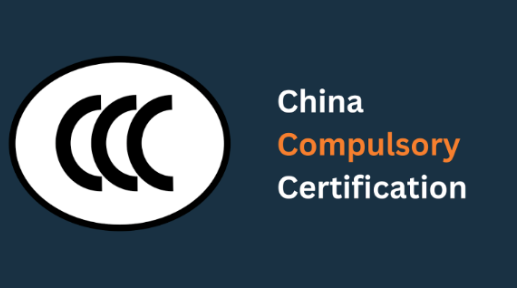
China introduced the most significant power bank rule change of recent years. Since August 2024, all power banks carried on flights departing from or arriving in China must carry CCC (China Compulsory Certification). This applies to domestic and international flights alike.
CCC certification is issued by the Certification and Accreditation Administration of China (CNCA) and requires testing at an accredited Chinese laboratory. The mark must appear physically on the device — not on packaging, and not as a sticker. Security officers at major Chinese airports verify the certification number against the official CNCA database at cx.cnca.cn.
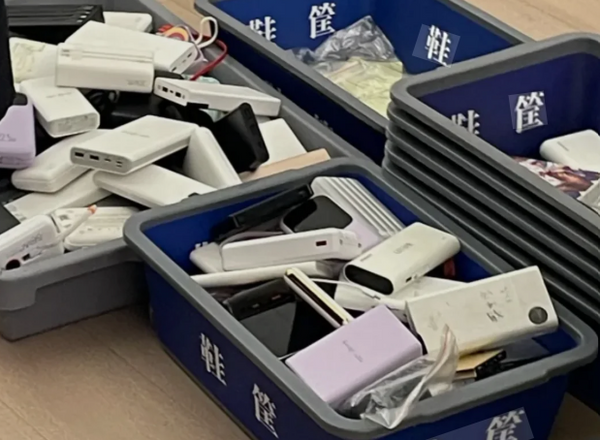
Power banks without CCC certification are confiscated at the gate. There is no appeal process and no compensation. This rule is enforced consistently at all major Chinese airports including Beijing Capital, Shanghai Pudong, Guangzhou Baiyun and Shenzhen Bao'an.
Japan: Stricter Enforcement Since 2025
Japan does not require a specific certification equivalent to CCC, but the country tightened its carry-on power bank rules in 2025. The Civil Aviation Bureau of Japan (MLIT) updated its guidelines to align with ICAO 2026 standards ahead of schedule.
Key points for Japan:
- Power banks must have a clearly readable Wh label on the device itself
- Devices without a Wh label may be refused by security even if within capacity limits
- ANA and JAL both require power banks to remain accessible in carry-on baggage throughout the flight
- The 100 Wh carry-on limit applies without exception
South Korea: Post-Air Busan Rules
Following the Air Busan incident, the Korea Civil Aviation Safety Authority (CASA) issued updated guidance in February 2025. Korean Air and Asiana both updated their policies within weeks.
Under current Korean rules, power banks must be carried in the cabin — not checked in. Devices must be individually protected against short circuit. Loose batteries in bags are flagged. The 100 Wh limit applies, and devices between 100 and 160 Wh require prior written approval from the airline.
Australia: CASA Updates 2025
The Civil Aviation Safety Authority of Australia updated its lithium battery guidelines in mid-2025. Australian rules now align fully with ICAO 2026 standards. The specific requirement that distinguishes Australian enforcement is the Wh label: devices must have the Wh rating clearly printed on the device or its original packaging. Devices without a readable label are at risk of confiscation at Australian security checkpoints.
European Union and UK
The EU and UK follow ICAO standards with CE certification as the baseline compliance requirement. There is no mandatory certification equivalent to China's CCC for EU flights. However, CE marking is a legal requirement for electronic devices sold within the EU, and devices without CE marking may be flagged at security in some EU airports.
The 100 Wh carry-on limit applies across all EU member states and the UK. Ryanair, easyJet and Lufthansa all specify this limit in their carry-on policies.
Airline-Specific Rules: What to Check Before You Fly
National regulations set the floor. Individual airlines can — and often do — impose stricter rules. Before any flight, check your airline's specific carry-on policy for lithium batteries. Key airlines and their current policies:
- Lufthansa: 100 Wh limit, CCC required for China routes
- ANA / JAL: 100 Wh limit, Wh label required, must remain accessible in cabin
- Korean Air: 100 Wh limit, prior approval for 100–160 Wh, individual protection required
- Qantas: 100 Wh limit, Wh label required
- Singapore Airlines: 100 Wh limit without restriction, 100–160 Wh with approval
- Emirates: 100 Wh limit, consistent with ICAO 2026
The Certifications That Matter
A fully compliant power bank for global travel should carry the following certifications:
- CCC — mandatory for China, verifiable at cx.cnca.cn
- CE — required for EU market, covers safety and electromagnetic compatibility
- FCC — required for US and Canada, covers electromagnetic interference
- UN38.3 — globally mandatory for lithium batteries in air transport, covers safety testing
- RoHS — EU environmental compliance, restricts hazardous substances
All NOBOARDER power banks carry every certification listed above. Each certificate is verified before a product goes on sale, and the CCC mark is part of the device casing — not a sticker.
The One-Minute Pre-Flight Checklist
- Check your power bank's Wh rating — use our free calculator if needed
- Confirm it is under 100 Wh for unrestricted travel
- Check for CCC mark on the device if flying to or from China
- Ensure the Wh label is readable on the device or packaging
- Check your specific airline's carry-on policy for lithium batteries
- Pack it in your carry-on — never in checked baggage
All NOBOARDER power banks are certified to CCC, CE, FCC, UN38.3 and RoHS standards. Browse our full range or check your current device with our free compliance calculator.
0 Kommentare