

Long-haul travel is unforgiving. The wrong gear gets left at security. The right gear gets you through 30 hours of transit without a dead phone, a missed connection or a gate confrontation you didn't see coming.
The Security Check Nobody Prepares For
Most long-haul travellers spend hours researching destinations, hotels and itineraries. Very few spend ten minutes checking whether their electronics are actually allowed on the flight. The result is predictable: confiscations, delays and the particular frustration of losing equipment you paid good money for at a checkpoint with no appeal.
The rules around carry-on electronics — particularly power banks and lithium batteries — have tightened significantly since 2024. What worked on your last trip may not work on this one. This guide covers what actually gets through security in 2026, and what doesn't.
Power Banks: The Most Confiscated Item at Airport Security
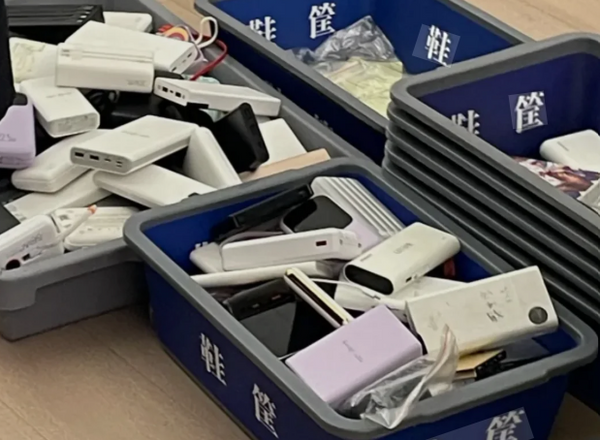
Power banks are the single most frequently confiscated electronic item at airport security worldwide. The reasons are straightforward: most travellers don't know the rules, most power banks don't display their Wh rating clearly, and enforcement has increased dramatically across Asia, Europe and Australia.
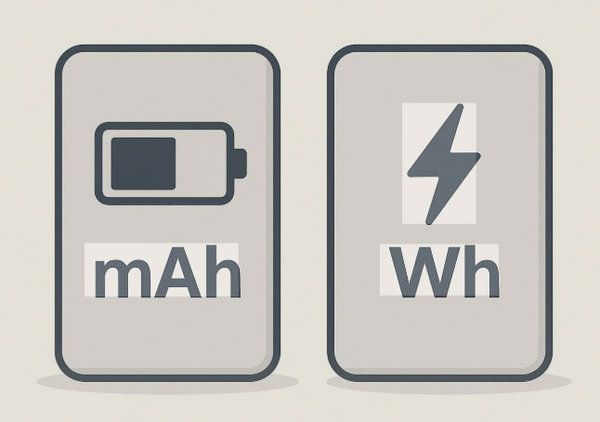
The universal carry-on limit is 100 Wh without prior airline approval. For standard 3.7V lithium-ion power banks, this corresponds to approximately 27,000 mAh. Most consumer power banks — 5,000 to 20,000 mAh — are well within this limit.
What gets through:
- Any power bank under 100 Wh with a readable Wh label
- Power banks with CCC certification for China routes
- Devices with CE, FCC and UN38.3 certification for global travel
What gets confiscated:
- Power banks over 100 Wh without prior airline approval
- Devices without CCC certification on China flights
- Power banks in checked baggage — prohibited globally
- Devices with missing or unreadable Wh labels at strict airports
Use our free mAh to Wh calculator to check your device before you pack. All NOBOARDER power banks are under 100 Wh and fully certified for global travel.
Cables and Adapters: What to Bring and What to Leave Behind
Cables and adapters rarely cause problems at security, but they do cause problems when you arrive. A long-haul trip through multiple countries requires planning beyond the single adapter you grabbed on the way out the door.
What actually works everywhere: A universal travel adapter covering Type A, B, C, G and I sockets covers the vast majority of destinations. Avoid cheap single-country adapters — they are useless the moment your plans change.
Cable essentials for long-haul: A USB-C to USB-C cable handles most modern devices. Add a USB-C to Lightning cable if you use Apple devices, and a short retractable cable for tight airport seating. Long cables are unnecessary weight — 0.5m to 1m is sufficient for most charging situations.
One item worth bringing that most travellers overlook: a USB-C multiport charger. A single 65W GaN charger weighs less than most standard chargers and handles laptops, phones and tablets simultaneously from one wall socket. On long-haul flights with limited outlet access, this is the difference between fully charged devices and not.
Noise-Cancelling Headphones: Worth Every Gram
Long-haul travel without noise-cancelling headphones is a different experience. Engine noise on a 12-hour flight sits at approximately 85 decibels — enough to cause fatigue and hearing stress over time. Active noise cancellation reduces this to manageable levels and makes sleep genuinely possible at altitude.
For carry-on purposes, headphones present no security issues. Wireless earbuds should be in a case with the lid closed for X-ray — loose earbuds cause unnecessary secondary screening delays.
The battery rule applies to wireless headphones and earbuds: their internal lithium batteries are permitted in carry-on without restriction because they are almost always well under 100 Wh. They cannot go in checked baggage.
What to Pack in Your Personal Item vs Your Carry-On
Long-haul travellers with both a personal item and a carry-on bag should think carefully about what goes where. At many Asian and Middle Eastern hubs, both bags go through X-ray simultaneously, and security staff may ask you to separate electronics.
Personal item (accessible during flight):
- Power bank — keep it accessible, not buried
- Cables and charger
- Phone, earbuds
- Passport and documents
- Any medication
Carry-on bag:
- Laptop in an easily accessible sleeve — most airports still require it out for X-ray
- Change of clothes for long transits
- Travel adapter
- Noise-cancelling headphones in a hard case
Never in checked baggage:
- Power banks and spare lithium batteries — prohibited globally
- Laptop and tablet — risk of theft and damage
- Any irreplaceable item
The Electronics That Security Actually Cares About
Beyond power banks, these are the items most likely to cause delays or problems at security in 2026:
Laptops: Still required out of bags at most international airports. Use a laptop sleeve that allows quick removal. Some TSA PreCheck and equivalent fast-track lanes now allow laptops to stay in bags — check before you travel.
Large cameras and lenses: Often flagged for secondary screening. Pack them accessibly and be prepared to power them on to demonstrate they are functional devices. Camera batteries follow the same rules as other lithium batteries.
Smart watches and fitness trackers: Generally waved through. Remove them at security in Japan and South Korea where metal detection is stricter.
E-readers: No issues. Treat them like a phone.
Long Transit Checklist: 24 Hours in an Airport
For travellers with extended layovers — common on budget long-haul routes through Middle Eastern or Asian hubs — preparation makes the difference between a manageable wait and a miserable one.
- Fully charged power bank before departure
- Universal adapter for airport lounge and gate charging
- Downloaded content — streaming requires Wi-Fi that is often slow or blocked
- Noise-cancelling headphones fully charged
- Portable door lock for airport hotel rooms during long transits
- A change of clothes accessible without unpacking your entire bag
Download our free long-haul packing checklist from the NOBOARDER Download Centre — a printable guide you can use before every trip.
The One Item Most Long-Haul Travellers Forget
A certified power bank. Not because travellers forget to bring a power bank — most experienced long-haul travellers carry one. They forget to check whether it will actually make it through security at every airport on their route.
A trip from Zurich to Tokyo to Beijing involves three separate sets of security rules. Swiss airports follow EU standards. Japanese airports enforce Wh labelling and the 100 Wh limit. Chinese airports require CCC certification. A power bank that clears Zurich and Tokyo may still be confiscated in Beijing.
The only power bank that works everywhere is one that meets every standard simultaneously. That means CCC, CE, FCC and UN38.3 certification, a clear Wh label, and a capacity under 100 Wh. Browse our full range of certified travel power banks — built for exactly this kind of route.
All NOBOARDER power banks carry CCC, CE, FCC, UN38.3 and RoHS certification. Free shipping on every order. Browse our certified range or download our free travel packing checklist.
0 Kommentare