

Over 1,000 power banks are confiscated at airports every day worldwide. Most of them belong to travellers who had no idea there was a problem. Here are the five reasons it happens — and how to make sure it doesn't happen to you.
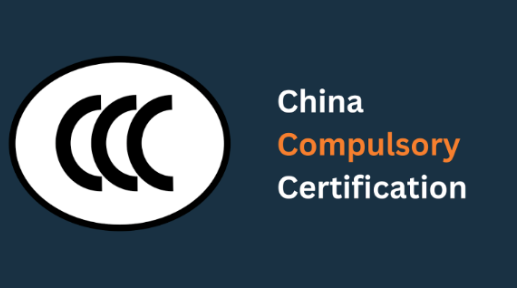
1. No CCC Certification for China Flights
This is the most common reason for confiscation at Chinese airports, and it has become significantly more frequent since August 2024 when China made CCC certification mandatory for all power banks on domestic and international flights.
CCC stands for China Compulsory Certification — a safety standard managed by the Certification and Accreditation Administration of China. The mark must appear physically on the device itself, not just on the packaging. Security officers at major Chinese airports including Beijing Capital, Shanghai Pudong and Guangzhou Baiyun check for this mark as a matter of routine. If it is absent, the device does not board.
The vast majority of power banks sold in Europe, the UK, Australia and North America are not CCC-certified. They may be perfectly safe and compliant everywhere else in the world — but at a Chinese airport, the absence of the CCC mark is grounds for immediate confiscation.
All NOBOARDER power banks carry genuine CCC certification, verifiable at cx.cnca.cn. The mark is part of the device casing — not a sticker.
2. Missing or Unreadable Wh Label
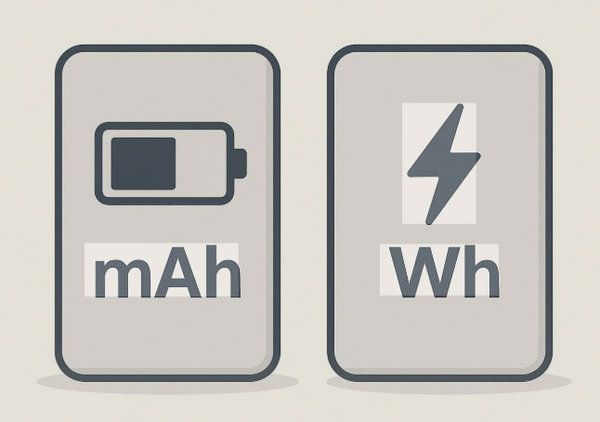
Airlines and aviation authorities regulate power banks by their energy content in watt-hours, not by their mAh rating. A power bank without a clearly readable Wh label gives security officers no way to verify whether it falls within the permitted limit — and increasingly, they will not let it through.
Japan and Australia in particular have tightened enforcement around Wh labelling since 2025. Officers at Tokyo Haneda, Sydney and Melbourne have been instructed to flag devices without readable Wh ratings. Some will perform the mAh-to-Wh conversion themselves. Many will not.
The fix is simple: before you fly, check that your power bank has a Wh rating printed on the device. If it only shows mAh, use our free mAh to Wh calculator to find the value — and consider writing it on the device or keeping the original packaging.
3. Capacity Over the 100 Wh Limit
The ICAO carry-on limit for power banks is 100 Wh without prior airline approval. This corresponds to approximately 27,000 mAh at the standard 3.7V nominal voltage. Power banks above this threshold require written approval from the airline in advance — approval that most airlines are reluctant to grant and that most travellers never think to request.
High-capacity power banks sold at 30,000 mAh or above almost always exceed the 100 Wh limit. Some are sold with marketing language that implies they are travel-friendly — the mAh number sounds large but acceptable. The Wh number tells a different story.
A 30,000 mAh power bank at 3.7V equals 111 Wh — over the limit. A 40,000 mAh device equals 148 Wh — approaching the absolute maximum of 160 Wh that applies even with approval. Anything above 160 Wh is prohibited entirely, in carry-on and checked baggage.
Check your device's Wh value before every trip using our free calculator.
4. Fake or Unverifiable Certifications
This is a growing problem that many travellers are completely unaware of. Some manufacturers print certification logos — including CCC-style marks — on their devices without having obtained genuine certification. The logos look identical to the real thing. The difference is that the certification number either does not exist in the official database or belongs to a different product entirely.
At Chinese airports, security officers routinely check certification numbers against the CNCA database at cx.cnca.cn. A fake mark fails this check immediately. The device is confiscated regardless of how authentic it appears.
This is not limited to cheap or unknown brands. Counterfeit certifications appear on products across all price ranges. The only protection is to verify the certificate number yourself before you travel — or to buy from a supplier who does this verification as standard practice.
Every NOBOARDER power bank is verified against the official CNCA database before it goes on sale. We publish the certification details for every product so you can verify them yourself.
5. Power Bank in Checked Baggage
This one surprises many travellers because the rule seems counterintuitive: lithium batteries are permitted in the cabin but prohibited in checked baggage. The reason is fire safety — a battery fire in the cabin can be identified and managed by crew. A battery fire in the hold cannot.
ICAO regulations prohibit spare lithium batteries — including power banks — in checked baggage entirely. This rule applies globally and without exception. It does not matter how well the device is packaged, how small it is, or whether it is switched off. Power banks in checked baggage will be removed if discovered during screening.
Some travellers put power banks in checked bags to avoid the carry-on scrutiny described in reasons one through four above. This trades one problem for another — and the consequences of a hold fire are significantly worse than a gate confiscation.
The rule is simple: power banks belong in your carry-on bag, accessible throughout the flight. Never in checked baggage.
How to Make Sure It Does Not Happen to You
The five reasons above share a common thread: they are all preventable with the right equipment and a basic pre-flight check. Before your next trip:
- Confirm your power bank has a readable Wh label on the device itself
- Calculate the Wh value using our free calculator if needed
- Verify it is under 100 Wh for unrestricted travel
- Check for a genuine CCC mark if flying to or from China
- Pack it in your carry-on — never in checked baggage
A NOBOARDER power bank addresses every point on this list. CCC, CE, FCC, UN38.3 and RoHS certified. Wh rating printed on the device. All models under 100 Wh. Designed for exactly the traveller who cannot afford a confiscation at the gate.
Browse our certified power banks or use our free airline compliance calculator to check your current device.
0 Kommentare