

CCC certification is the most important — and least understood — requirement for travelling with a power bank to China. Here is everything you need to know, including how to verify a certificate in under 60 seconds.
What CCC Certification Actually Is
CCC stands for China Compulsory Certification — in Chinese, 强制性产品认证 (Qiángzhìxìng Chǎnpǐn Rènzhèng). It is a mandatory safety and quality certification managed by the Certification and Accreditation Administration of the People's Republic of China (CNCA). The programme was established in 2002 and has been continuously updated to cover new product categories as they become relevant to consumer safety.
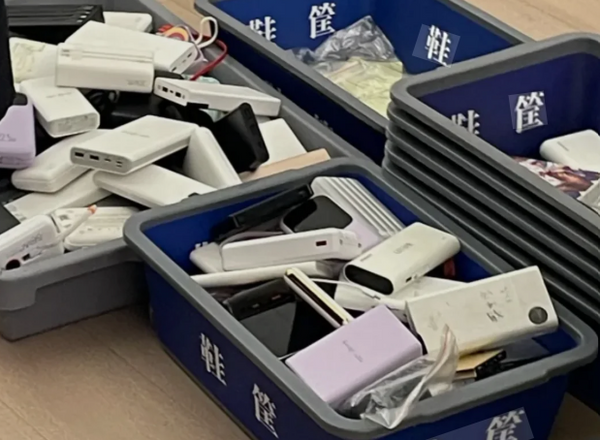
For power banks specifically, CCC certification became mandatory in August 2024 following a series of lithium battery incidents on Chinese domestic flights. The Civil Aviation Administration of China (CAAC) mandated that all power banks carried on flights departing from or arriving in China must carry a valid, verifiable CCC certificate. This applies to both domestic and international routes.
CCC is not a voluntary quality mark or a marketing certification. It is a legal requirement enforced at the point of security screening. A power bank without a valid CCC certificate cannot legally board a flight at a Chinese airport.
What the CCC Mark Looks Like
The CCC mark is a circular logo containing the letters "CCC" in a specific typographic style. The mark must appear directly on the product itself — moulded into the casing, engraved, or permanently printed. It cannot appear only on packaging, and it cannot be a sticker applied after manufacture.
The mark is accompanied by a unique certification number that identifies the specific product, manufacturer and testing laboratory. This number is what security officers use to verify authenticity. The mark alone is not sufficient — a fake mark is indistinguishable visually from a genuine one. The number is what makes the difference.
How to Verify a CCC Certificate in 60 Seconds
The CNCA maintains a public database of all valid CCC certificates at cx.cnca.cn. The verification process is straightforward:
- Go to cx.cnca.cn
- Find the certification number on your power bank — it appears near the CCC mark
- Enter the number in the search field
- The database returns the product details, manufacturer, issuing laboratory and certificate status
A genuine certificate returns a clear result matching the product in your hand. A fake certificate returns no result, an expired result, or a result that belongs to a different product entirely. The check takes under a minute and is the single most reliable way to confirm your power bank will clear Chinese security.
Chinese airport security officers perform exactly this check. If the number you can verify at home is the same number they check at the gate, you will not have a problem.
Why Fake CCC Certifications Are Common
CCC certification requires testing at an accredited Chinese laboratory, a formal application to the CNCA, factory inspections and ongoing compliance monitoring. The process takes months and costs thousands of dollars per product. For manufacturers selling primarily outside China, this investment is difficult to justify on cost grounds alone.
The result is a predictable market response: some manufacturers print CCC-style logos on their products without obtaining genuine certification. The visual difference between a real CCC mark and a counterfeit is undetectable to the naked eye. The only way to distinguish them is to check the certification number in the CNCA database.
This is not limited to budget brands or obscure manufacturers. Counterfeit certifications have been found on products across all price ranges. The certification logo is easy to reproduce. The database entry is not.
What CCC Testing Actually Covers
CCC certification for power banks requires testing against GB/T standards — China's national technical standards for consumer electronics and lithium batteries. The tests cover:
- Electrical safety: Short circuit protection, overcharge protection, over-discharge protection, overcurrent protection
- Thermal safety: Performance under high and low temperature conditions, thermal runaway prevention
- Mechanical safety: Drop resistance, vibration resistance, crush resistance
- Environmental testing: Performance under humidity, altitude simulation relevant to air transport
- Labelling requirements: Capacity in Wh, manufacturer information, safety warnings
The testing is conducted at a CNCA-accredited laboratory and reviewed by a certification body before the certificate is issued. Factory inspections verify that the products being manufactured match the certified samples.
How CCC Compares to CE, FCC and UN38.3
Travellers who research power bank certifications will encounter several marks. Understanding what each covers helps clarify why CCC cannot simply be replaced by the others for China travel:
- CE (European Union): Covers safety, electromagnetic compatibility and environmental requirements for the EU market. Mandatory for products sold in the EU. Does not satisfy China's CCC requirement.
- FCC (United States and Canada): Covers electromagnetic interference and compliance for the North American market. Does not satisfy CCC requirements.
- UN38.3: A globally mandatory test standard for lithium batteries in air transport, covering safety under transport conditions. Required by ICAO for all lithium batteries on aircraft. Does not satisfy CCC requirements.
- RoHS: EU environmental directive restricting hazardous substances. Not relevant to Chinese aviation security.
- CCC: Required specifically for flights to and from China. Cannot be substituted by any other certification.
A power bank that carries CE, FCC, UN38.3 and RoHS — but not CCC — is fully compliant for European and North American travel. It will be confiscated at a Chinese airport. The certifications address different markets and different regulatory frameworks. For global travel, you need all of them.
Which Products Must Carry CCC Certification
CCC certification applies to power banks — portable lithium battery chargers designed for consumer use. It applies regardless of:
- The country of manufacture
- The country of purchase
- The brand or price point
- Whether the device has been used previously without issue
If you are carrying a power bank on a flight that departs from or arrives in mainland China, CCC certification is required. Hong Kong and Macau operate under different regulatory frameworks and are not currently subject to the same CCC enforcement at airports, though this may change.
How NOBOARDER Handles CCC Verification
Every power bank we sell is sourced from manufacturers who hold valid CCC certification for the specific product model. Before a product goes on sale, we verify the certification number against the CNCA database at cx.cnca.cn. We do not sell products with expired certificates, certificates that have been transferred from different models, or certificates that cannot be independently verified.
The CCC mark on every NOBOARDER power bank is part of the device casing — moulded or permanently printed, not a sticker. The certification number is visible on the device and can be verified by you before you travel, and by security officers at the gate.
This is not a marketing claim. It is a verifiable fact. Go to cx.cnca.cn, enter the number from your NOBOARDER device, and confirm it yourself.
Before Your Next Flight to China
- Find the CCC mark on your power bank — look for the circular logo on the device casing
- Locate the certification number near the mark
- Verify the number at cx.cnca.cn
- Confirm the result matches your device
- If no result appears or the details do not match, do not travel with that device to China
If your current power bank does not carry CCC certification, browse our range of certified travel power banks. Every model ships with full CCC, CE, FCC, UN38.3 and RoHS certification — verified before it leaves our supplier.
NOBOARDER specialises in airline-certified travel power banks. Every product carries genuine, verifiable CCC certification. Browse our full range or verify any certificate yourself at cx.cnca.cn.

0 Kommentare